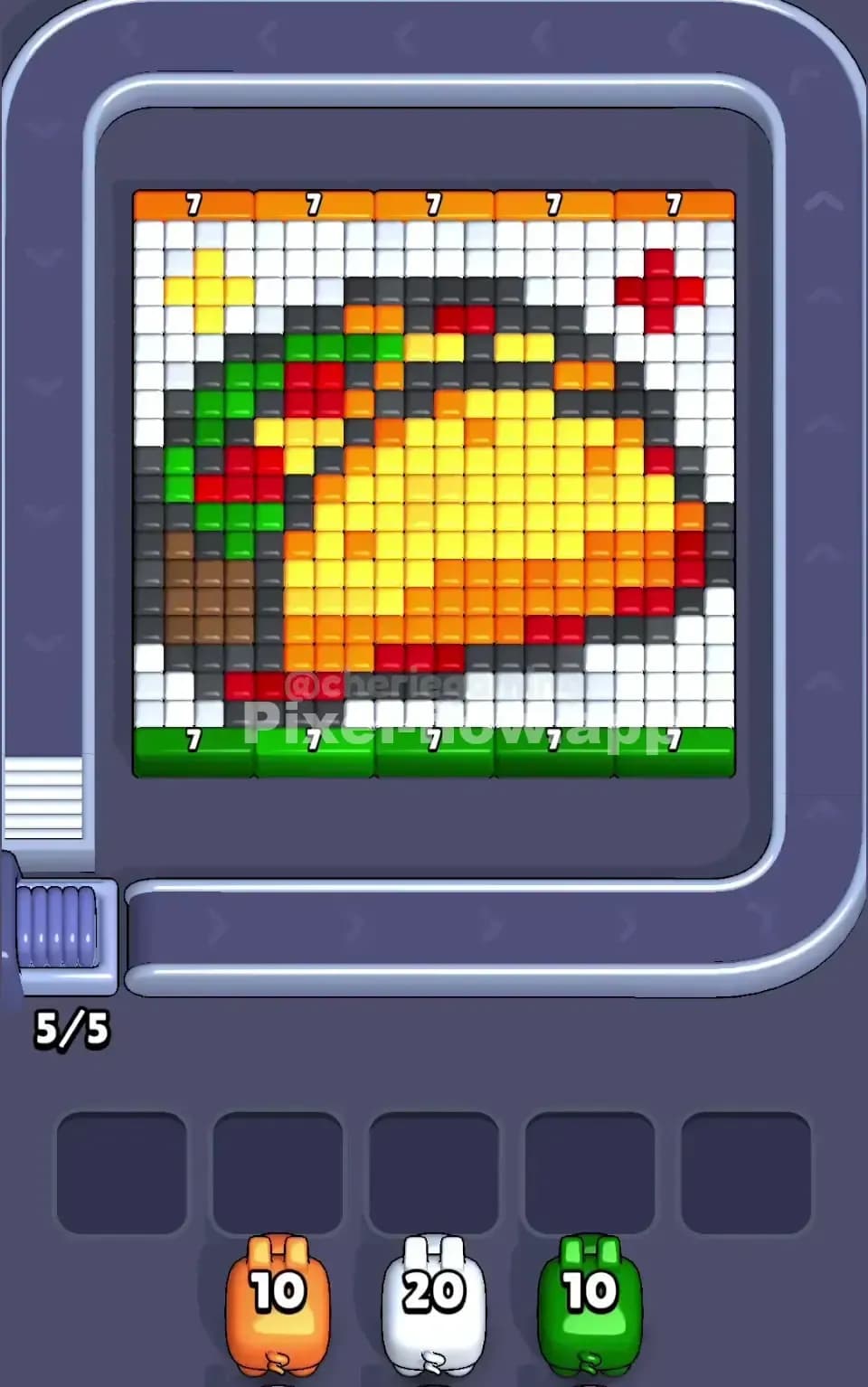
Pixel Flow Level 97 Solution | Pixel Flow 97 Walkthrough
How to beat Pixel Flow Level 97: Video solution & walkthrough. The fastest way to pass Pixel Flow 97.
Is this the wrong level layout?🤔
Pixel Flow randomizes levels for different players. Don't worry, just upload a screenshot of your board, and our AI will find the correct video instantly.
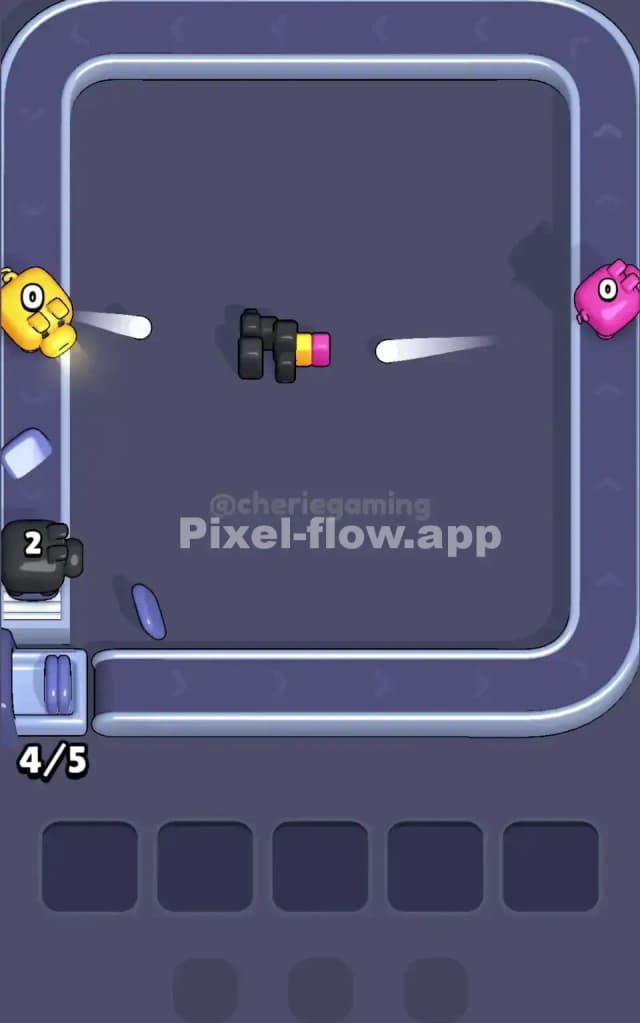
Pixel Flow Level 97 Overview
The Board Layout and Dominant Colors
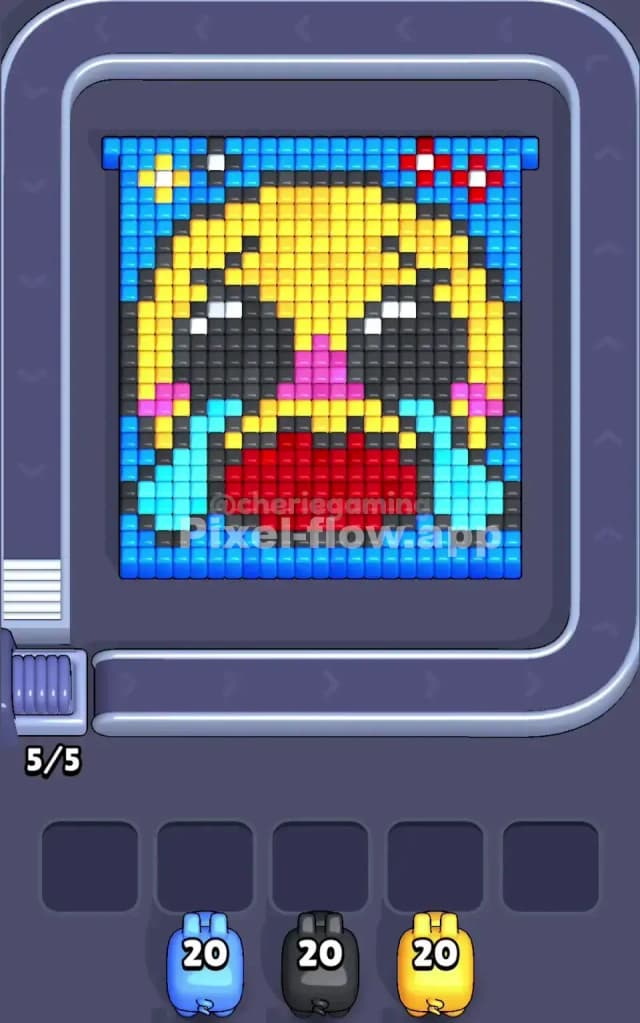
Pixel Flow Level 97 presents a stunning pixel art portrait of a character with a bright, cheerful expression—think big yellow features dominating the upper-middle section of the board. The canvas is layered like a visual puzzle, with blue forming the outer frame and borders, yellow creating the main facial features and highlights, black defining shadows and contours, magenta accenting smaller details, cyan filling supporting regions, white providing bright highlights, and red occupying a substantial section in the lower portion. What makes Pixel Flow 97 so visually rich is that these colors aren't evenly distributed; they're stacked in depth, meaning you'll need to clear outer layers to expose and access inner cubes. The portrait's symmetry is deceptive—it looks straightforward at first glance, but the ammo counts and pig queue create a real puzzle underneath.
The Win Condition and Deterministic Nature
Your goal in Pixel Flow Level 97 is straightforward: clear every single voxel cube from the board. You'll do this by releasing color-coded pigs from the conveyor belt in the order they appear. Each pig automatically shoots cubes matching its color, spending one ammo per cube destroyed. When a pig runs out of targets or ammo, it drops into one of the five waiting slots below. The critical constraint is that you're stuck if all five slots fill with pigs that still have unused ammo and no valid targets remaining—that's an automatic loss. The good news? Every pig's ammo count and the order they arrive are completely deterministic, so this isn't a luck-based level; it's pure strategy and planning.
Why Pixel Flow Level 97 Feels So Tricky
The Central Bottleneck: Layered Colors and Limited Slots
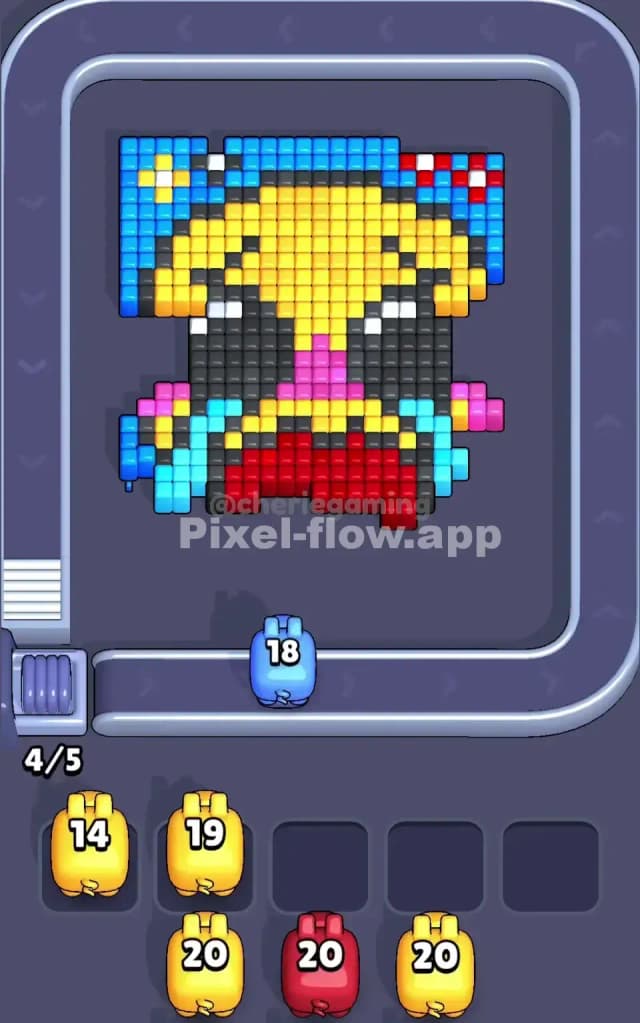
The biggest threat in Pixel Flow Level 97 is the sheer density of yellow cubes combined with the deep positioning of red underneath. Yellow appears everywhere—the character's face, the hair, the outline details—and you'll have yellow pigs coming down the belt with 20 ammo each. However, until you peel away the layers of black, cyan, and magenta sitting in front of some of those red cubes, you can't access them. If a red pig arrives before its targets are exposed, it'll drop into a waiting slot, still hungry. Simultaneously, if your yellow pigs burn through their ammo too quickly on the obvious yellow clusters, they'll also park themselves in the buffer. Managing this dance between exposing new layers and keeping the waiting slots from jamming is where Pixel Flow Level 97 punishes careless play.
The Awkward Color Patches and Ammo Mismatches
Look closer at Pixel Flow Level 97, and you'll notice several small pockets of magenta and white scattered throughout the board—they're not huge, but they're definitely there. These aren't just decorative; they're strategic traps. A white pig might arrive with 20 ammo, but there are only a handful of white cubes visible on the surface. That pig will dump itself into a waiting slot with nearly full ammo, consuming valuable space. Similarly, the cyan regions are split between the edges and some mid-board details, so a cyan pig might clear half its ammo on the outer border, then stall when the next cyan pig needs to finish the interior patches. Black is another tricky one—it's scattered as shadows and contours, creating isolated pockets that don't all become available at once.
When It Clicks: A Personal Realization
I'll be honest—Pixel Flow Level 97 frustrated me the first few attempts. I kept thinking I could just blast yellow cubes off the surface and let the rest fall into place. Wrong. The level would jam around the third or fourth pig, and I'd stare at a half-full waiting slot containing a black pig with 10 ammo remaining while the conveyor continued feeding me pigs I couldn't place. The breakthrough came when I stopped reacting and started planning. I wrote down the pig queue, noted their ammo counts, and mapped out which colors were blocking which layers. Suddenly, the level transformed from chaotic to elegant—it's not random at all, it's a perfect puzzle once you see the intended sequence.
Step-by-Step Strategy to Clear Pixel Flow Level 97
Opening: Start Blue and Cyan, Preserve Buffer Space
Your first move in Pixel Flow Level 97 should be to target the blue pigs, since blue forms the outer frame of the entire portrait. You'll have a blue pig (20 ammo) arriving early in the queue, and blue cubes are abundantly visible on all edges. Release that blue pig and let it clear the outer border—this serves two purposes: it clears obvious real estate and it exposes some of the interior colors hiding beneath. While that's happening, start mentally queuing your next move. Don't let the waiting slots fill beyond three pigs; you need to maintain at least two empty slots as a safety buffer. This means you're being selective about which pigs you release and when. If a cyan pig arrives next and cyan is reasonably accessible on the board, consider releasing it immediately to keep momentum. The golden rule for the opening phase of Pixel Flow Level 97 is "keep the buffer breathing"—if you see five pigs queued and only two waiting slots free, hold off and let existing pigs finish their work.
Mid-Game: Sequence for Exposure, Park Strategically
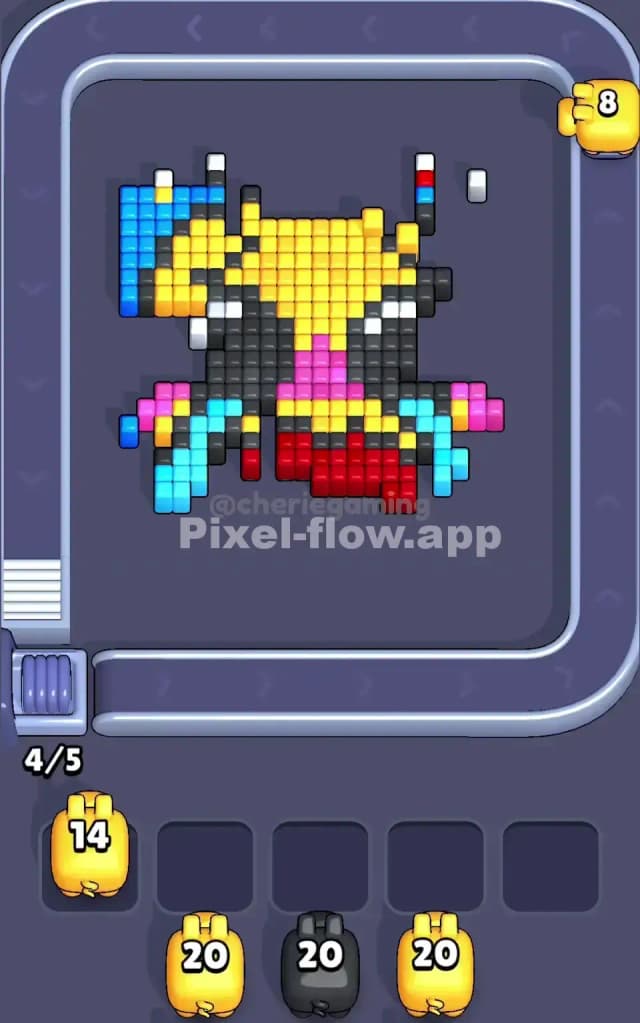
Once you've cleared the blue border in Pixel Flow Level 97, you'll notice that yellow becomes your primary target. The yellow pig's 20 ammo and the abundance of yellow cubes mean it'll clear a huge swathe of the portrait's main features—the face, hair, and center details. Release the yellow pig and watch the board transform; suddenly, you'll see black contours and magenta accents underneath. Here's where patience becomes critical: you might have a black pig waiting in the queue, but black cubes aren't all visible yet because some are still covered by yellow. Don't panic. Let the board settle, count what's exposed, and if the black pig can't spend enough ammo to clear itself off, park it in a waiting slot for now. The mid-game phase of Pixel Flow Level 97 is about staggering releases, not rushing them. Release a white pig to clear highlights, let the board shift, then release cyan to access interior pockets, then release magenta for fine details. Watch the waiting slots like a hawk; if one fills up with a pig that has 5+ ammo remaining and no targets, you've made a sequencing error. Back up mentally and plan the next three pigs differently on your next attempt.
End-Game: Empty the Red Core Cleanly
The final challenge in Pixel Flow Level 97 is clearing the red block in the lower portion of the board. Red is deep—it's got black, yellow, and cyan piled on top of it. By the time you're ready to release the red pig, you should have cleared or heavily reduced most other colors. The red pig (likely 20 ammo) will finish the job, but only if the path is clear. Sequence your final pigs to ensure that by the time red arrives, its cubes are either visible or about to be exposed by the pig immediately before it. The last few moves of Pixel Flow Level 97 should feel clean and inevitable—no scrambling, no desperate buffer management. If you've planned correctly, you'll finish with all five waiting slots empty and the board cleared, leaving you ready to move on to the next challenge.
The Logic Behind This Pixel Flow Level 97 Plan
Exploiting Order, Ammo, and Slot Management
The strategy for Pixel Flow Level 97 works because you're not fighting against randomness; you're reading a predetermined sequence and adapting to it. Each pig arrives in a fixed order with a fixed ammo count. By knowing the order and planning which colors to expose in which sequence, you're essentially creating a domino effect where each pig's release unlocks the targets for the next one. The waiting slots aren't punishment—they're a puzzle mechanic. Pigs that park themselves are just waiting for the board to shift beneath them, exposing new targets. Your job is to orchestrate that shift by releasing other pigs in a deliberate order. This is why Pixel Flow Level 97 rewards planning and punishes impulsive play.
Staying Calm: Counting, Watching, and Planning Ahead
The final key to mastering Pixel Flow Level 97 is maintaining composure and staying two or three pigs ahead in your mind. Before you release a pig, glance at the conveyor queue and note what's coming. Count the ammo on waiting pigs and match it against visible targets. If you see a potential jam forming—say, three pigs in the buffer with eight total ammo, but only six exposed cubes remaining—pause and release a different pig to expose more cubes first. This proactive mindset transforms Pixel Flow Level 97 from a stressful gauntlet into a satisfying logic puzzle. You're in control, not the game. Trust the sequence, trust your planning, and Pixel Flow Level 97 will reward you with a clean, efficient victory.