Pixel Flow Level 98 Solution Walkthrough | Pixel Flow 98

How to solve Pixel Flow level 98? Get instant solution for Pixel Flow 98 with our step by step solution & video walkthrough.

Share Pixel Flow Level 98 Guide:
Pixel Flow Level 98 Gameplay
Pixel Flow Level 98 Solution 1
Pixel Flow Level 98 Solution 2
Pixel Flow Level 98 Solution 3

Pixel Flow Level 98 Overview

The Owl Pixel Art and Its Color Layers

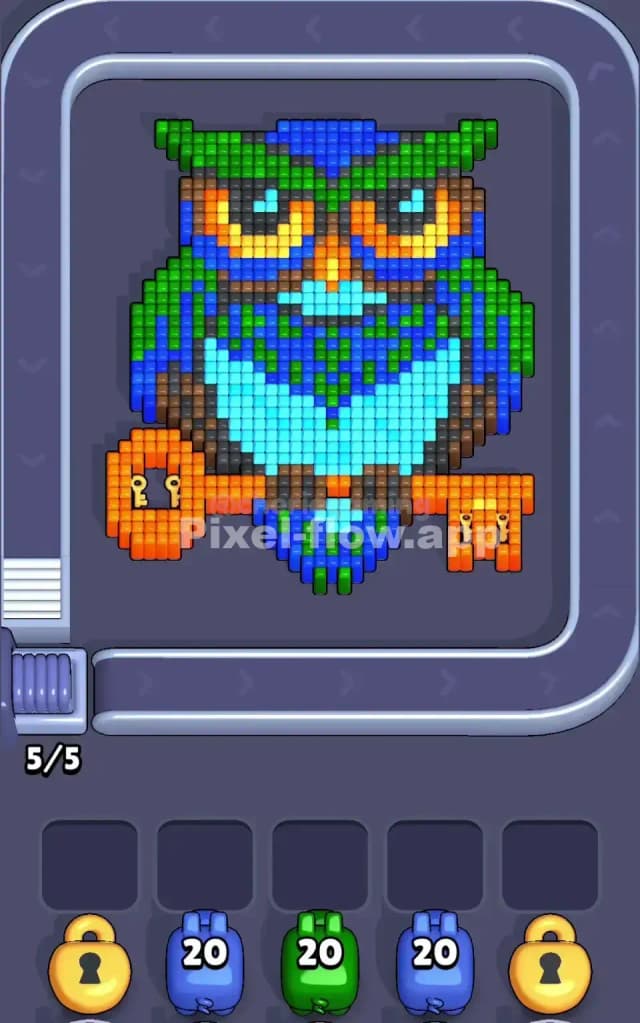
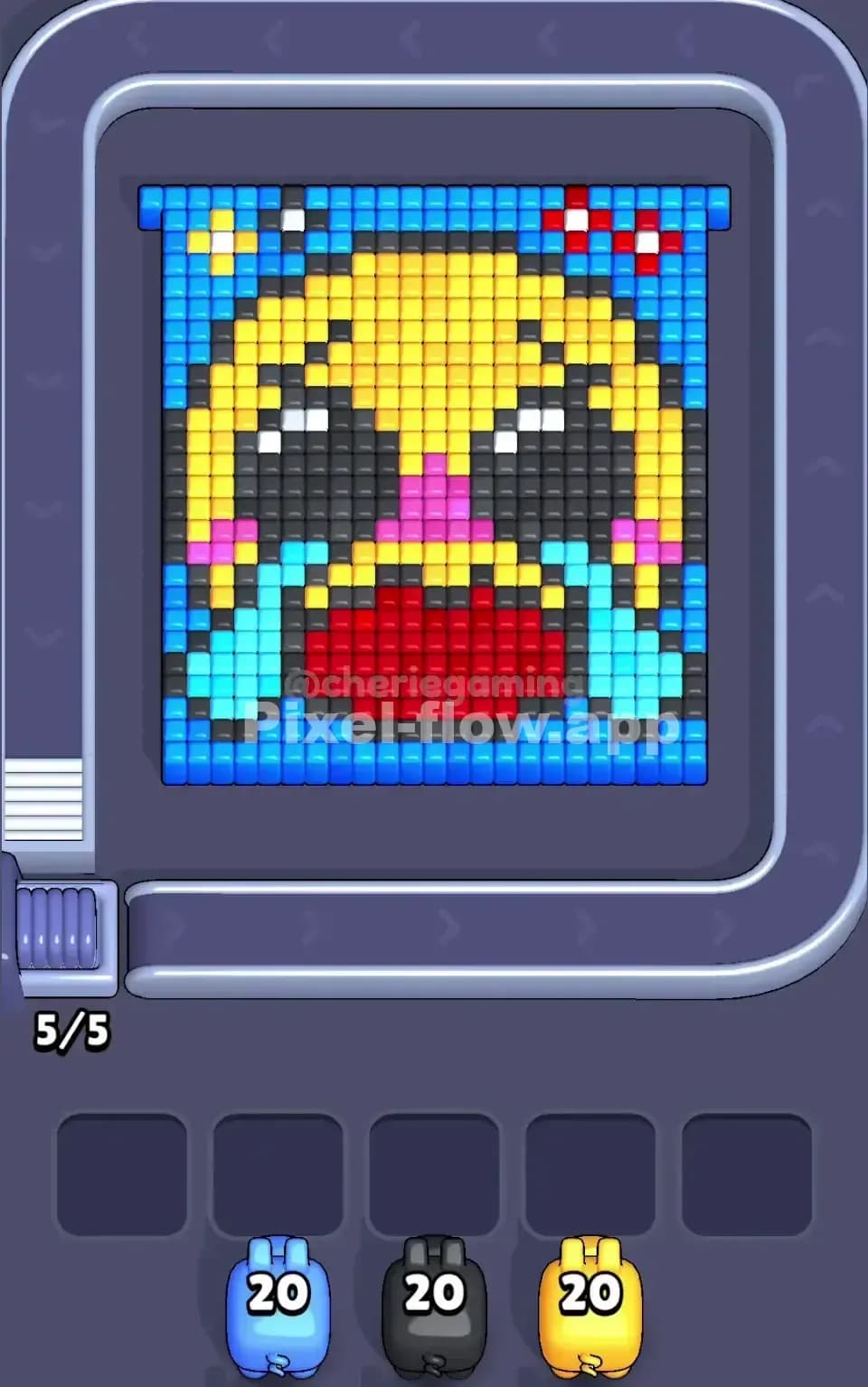
Pixel Flow Level 98 presents you with a charming owl pixel art that's far more complex than it first appears. The owl's face dominates the center of the board with big expressive eyes rendered in cyan, surrounded by orange and yellow tones that form the beak and facial structure. Behind that friendly facade lies a deceptively intricate layering system featuring green feathers on the wings and head, blue plumage across the body, brown and gray undertones, and cyan patches woven throughout the design. What makes this level particularly demanding is that the colors aren't isolated in neat zones—they're interlocked, meaning you can't simply obliterate one color and move on. You'll need to carefully sequence your pigs to expose deeper layers without painting yourself into a corner where your remaining pigs have ammo but nowhere to spend it.

Understanding the Win Condition and Deterministic Pig Order

Your goal in Pixel Flow Level 98 is straightforward: clear every single voxel cube from the board before your waiting slots overflow with stuck pigs. You're working with five pigs, each with exactly 20 ammo, and five waiting slots at the bottom. The pig order is fully deterministic—you'll always face the same sequence—which means this level rewards planning over reflexes. Every cube you destroy consumes one unit of ammo from the attacking pig, and once a pig runs out of ammo or has no valid targets, it drops into a waiting slot. If all five slots fill up and you still have colored cubes on the board, you've failed. The key insight is that Pixel Flow Level 98 isn't about speed; it's about reading the board layout, understanding which colors block which, and orchestrating your pig attacks so that ammo expenditure perfectly aligns with cube availability.


Why Pixel Flow Level 98 Feels So Tricky

The Cyan Bottleneck and the Waiting Slot Trap

The biggest threat in Pixel Flow Level 98 is the cyan color. It's scattered across the board—in the eyes, throughout the body, and in small patches that feel disconnected from one another. You'll have pigs with 20 ammo ready to fire at cyan, but here's where it gets nasty: cyan cubes are interspersed with other colors, meaning you can't always access all of them at once. If you bring out a cyan pig too early and it only finds 12 accessible targets, you're left with 8 ammo and nowhere to go. That pig drops into a waiting slot, and now you're one slot closer to catastrophic failure. The cyan situation is exacerbated by the fact that clearing cyan might be necessary to expose deeper layers, but the scattered placement means you'll struggle to spend all that ammo in one push. This is the primary reason Pixel Flow Level 98 demands patience and sequencing discipline.

Awkward Color Patches and Hidden Ammo Mismatches

Beyond cyan, you'll encounter two additional problem spots that trip up most players. First, the orange cubes along the bottom of the owl's body form an oddly wide band that's hard to fully clear without first tackling adjacent colors. You might have an orange pig with 20 ammo, spot what looks like 15 orange cubes, and assume you're fine—but several of those cubes are blocked by brown or gray. Trying to force the orange pig anyway wastes ammo and leaves it stranded in a waiting slot. Second, the green feathering on the wings and top of the head creates a misleading visual density. Green looks abundant, but chunks of it are buried beneath blue and cyan layers. Sending your green pig in too early leaves it spinning its wheels and clogging up your buffer.

The Moment It Clicked for Me

Honestly, Pixel Flow Level 98 frustrated me for several attempts until I stopped rushing and started actually counting. I'd see a color and immediately tap the pig, only to watch it run dry mid-clearing and plunk uselessly into a waiting slot. The breakthrough came when I paused mid-game and visually traced which colors were actually touching, which ones were separated by others, and which colors I had to clear first to expose the rest. That's when the level went from chaotic to logical. Once I accepted that I needed to sketch out a rough three-to-four pig plan before committing to the first move, Pixel Flow Level 98 became genuinely solvable.


Step-by-Step Strategy to Clear Pixel Flow Level 98

Opening: Secure Blue and Green to Free Your Lanes

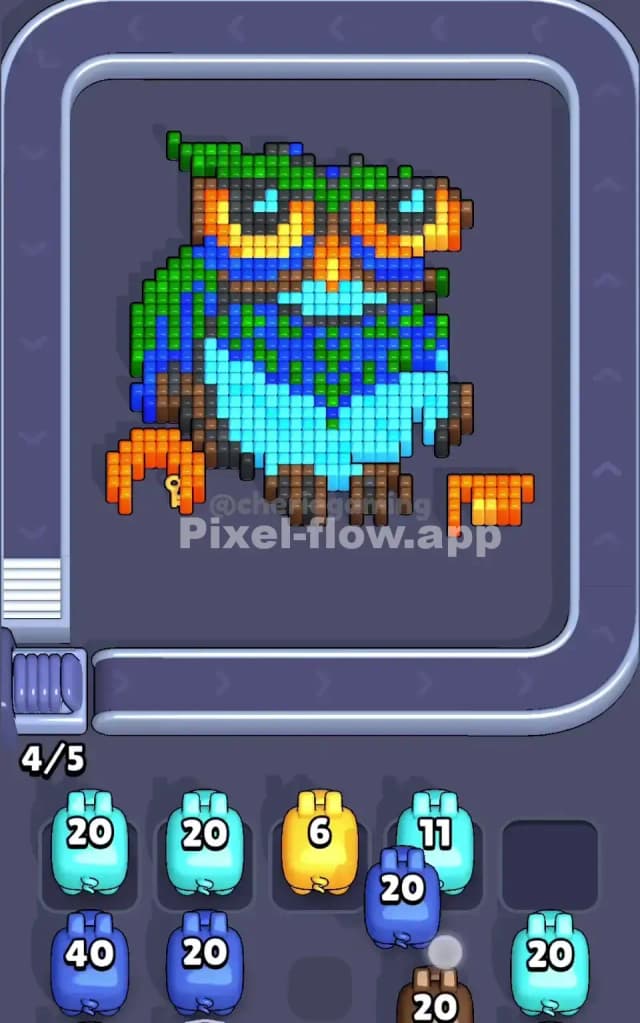
Your opening move in Pixel Flow Level 98 should target blue, and here's why. Blue is plentiful—it forms the main body mass—and despite being somewhat layered, roughly 18 of its 20 cubes are accessible right away without needing to clear other colors first. By deploying blue first, you accomplish two critical things: you burn through a pig's full ammo count (or very close to it), and you carve away the bulk of the board's visual density, revealing what's underneath. This keeps your waiting slots empty and gives you clear sight lines to the remaining colors.

Once blue is partially cleared, immediately follow with green. Green forms the wing borders and head feathers, and clearing it exposes cyan patches and internal structure. The green pig will likely use 16 to 18 of its 20 ammo, leaving a small buffer. Crucially, don't panic if green still has 2–3 ammo left over; it's better to park it in a waiting slot now with just 2–3 wasted ammo than to chain pigs together and jam everything. You should still have three empty waiting slots at this point, giving you breathing room.

Mid-Game: Expose Layers and Sequence Orange Strategically

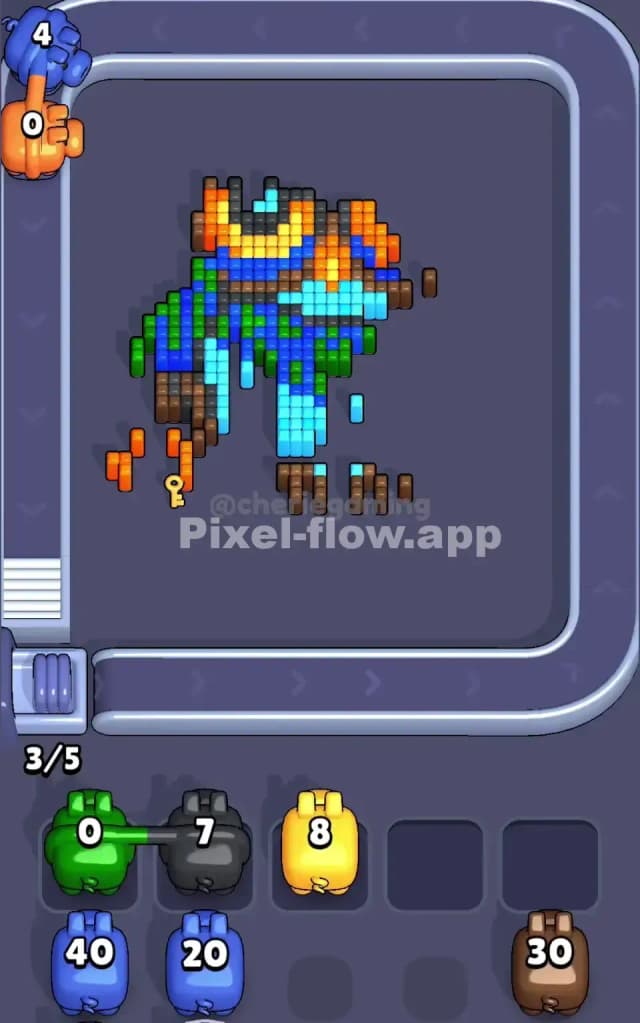
Now that blue and green have carved out the general shape, you're looking at cyan, orange, and yellow as your remaining colors. This is where Pixel Flow Level 98 truly tests your planning. Orange comes next, and here's the strategy: orange forms a coherent band around the owl's face and body, and while some cubes are blocked by brown/gray, you can access roughly 16–17 of them once blue and green are gone. Send orange and expect it to consume most of its 20 ammo, leaving 3–5 unspent. Park it in a waiting slot (you should have three slots free, so you're fine).

The reason orange is third and not fourth is that clearing orange exposes critical yellow and brown cubes that cyan and your final color will need. If you tried cyan before orange, you'd waste cyan ammo chasing scattered targets instead of fully clearing the eyes and inner face region.

End-Game: Cyan and Yellow Cleanup with Zero Waste

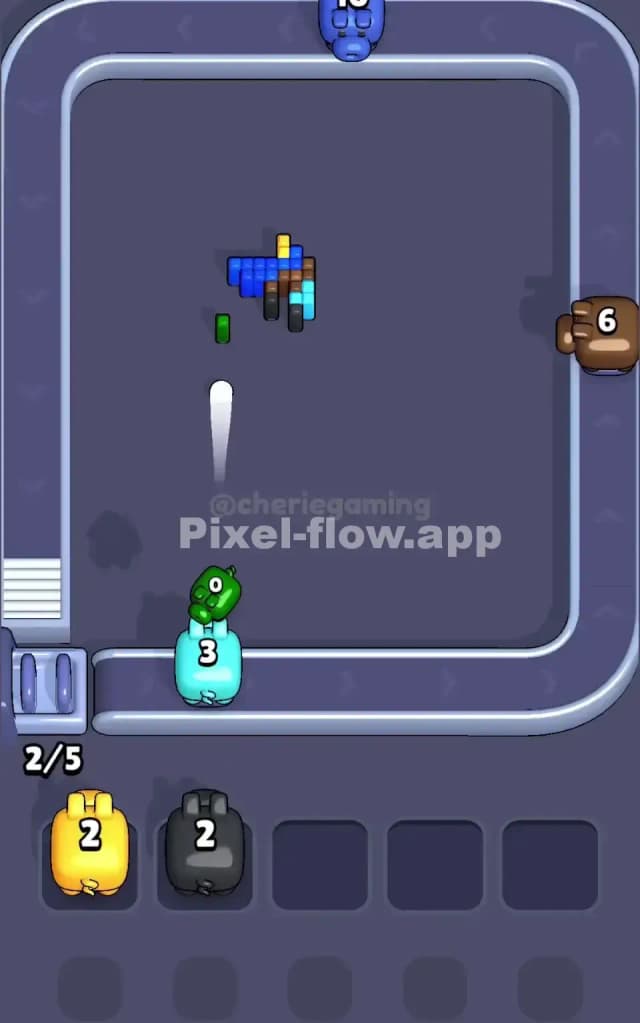
By now, you've used three pigs and occupied three of your five waiting slots. Cyan comes fourth, and you'll have roughly 12–14 accessible cyan cubes remaining (the eyes, some body patches, and any exposed inner layers). Your cyan pig will spend 12–14 ammo and drop into the fourth waiting slot with 6–8 ammo remaining. This is acceptable because you have only one pig left.

Yellow is your finisher. The beak and facial accent cubes are now fully exposed, and you'll find roughly 18–19 yellow cubes available. Your final yellow pig will clear virtually all of them in a single run. If somehow 1–2 yellow cubes are still on the board, you've made a sequencing error earlier—but if you've followed this plan, Pixel Flow Level 98 should clear with zero cubes remaining.


The Logic Behind This Pixel Flow Level 98 Plan

Why Pig Order Defeats Randomness

The genius of this Pixel Flow Level 98 strategy is that it respects the game's deterministic nature. You're not reacting to what the pigs do; you're predicting it. By studying the board layout and understanding that each pig has exactly 20 ammo, you can calculate in advance which colors are truly accessible and which are hidden. This transforms Pixel Flow Level 98 from a frustrating guessing game into a logical puzzle. Blue goes first because it's dense and exposed. Green follows because it's next in spatial sequence and frees up internal layers. Orange third because it's the gatekeep between early and late colors. Cyan and yellow last because they're exposed only after the overlying colors are cleared. This order isn't arbitrary—it's derived from the board's actual geometry.

Staying Calm and Counting Two Pigs Ahead

The mental discipline required for Pixel Flow Level 98 boils down to one habit: before you tap a pig, glance at the queue and count the next two pigs' ammo amounts. Ask yourself, "Will this pig find enough targets? If not, how many slots will be filled by the end of my sequence?" Keep at least two waiting slots free at all times as a buffer. Watch the board state after each pig fires—don't just assume your plan will work; verify that new colors are being exposed. If a pig runs dry earlier than expected, pause and recalibrate. Pixel Flow Level 98 rewards this deliberate, thoughtful approach far more than it rewards speed. You're building a mental model of the board's layer structure, and that model is your roadmap to victory.